About this place
Location and Access
Cofete Beach is located on the west coast of the Jandía peninsula, in the southern part of Fuerteventura, one of Spain's Canary Islands. The beach is situated within the bounds of the Jandía Natural Park, a protected area. Its location is remote and not directly connected to the island's main tourist centers.
Access to Cofete is primarily via a winding, unpaved dirt road approximately 20 kilometers long, which begins near the town of Morro Jable. The road traverses the mountainous terrain of the Jandía massif and can be challenging due to its uneven surface, sharp turns, and lack of guardrails. While some standard cars attempt the route, a vehicle with higher clearance or a 4x4 is often recommended for a safer and more comfortable journey. The drive itself can take up to an hour. There is also a public bus service that uses an all-terrain vehicle to connect Morro Jable with the village of Cofete.
Physical Characteristics
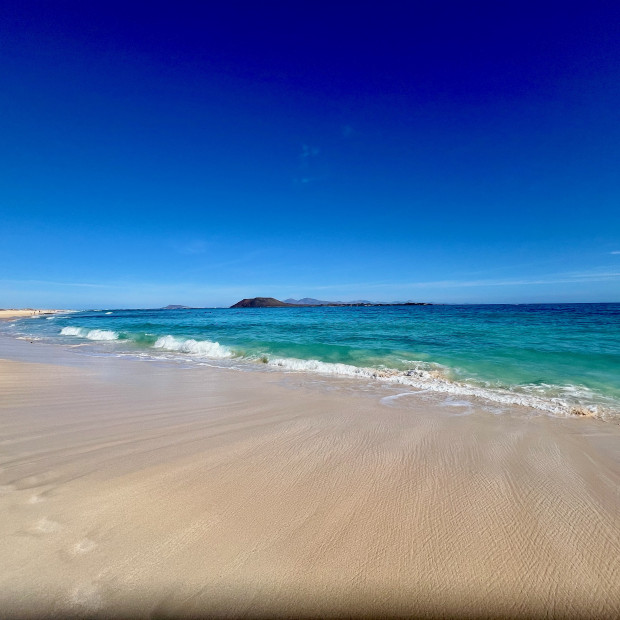
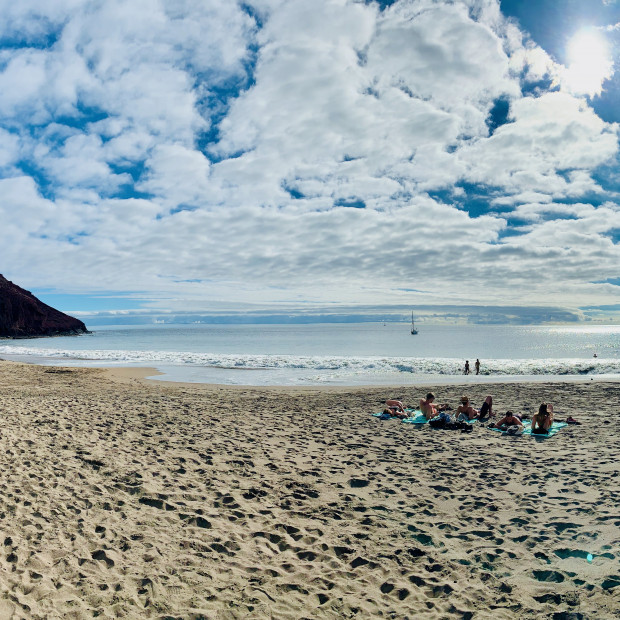
The beach stretches for about 12 kilometers, composed of golden sand. It is backed by the steep mountains of the Jandía range, which often gather clouds, creating a distinct microclimate. The area is largely undeveloped, with very few buildings or facilities directly on the beachfront.
The Atlantic Ocean at Cofete is characterized by strong, persistent waves and powerful currents. These conditions make swimming dangerous and generally not recommended. The beach is exposed to constant winds, which is typical for this part of the Fuerteventura coast. Due to its size and isolation, the beach is rarely crowded.
History and Points of Interest
Near the beach lies the small settlement of Casas de Cofete, which has a population of only a few dozen people. The first registered settlements in the area date back to the early 19th century, with about 28 families living there by 1823. For a time, it was a central economic point on the peninsula. There is also a small, sand-swept cemetery near the shore, which was established so locals would not have to transport their deceased across the mountains.
Overlooking the beach from a mountainside is Villa Winter. This substantial house was built in the 1940s by Gustav Winter, a German engineer. The villa's remote location, construction during World War II, and features like a tower and thick walls have led to numerous theories about its purpose. These speculations, which remain unproven, include its use as a secret supply station for German submarines, a clandestine clinic, or a safe house for Nazi officials after the war. The building can be visited, though its interior is largely unfurnished.