About this place
Puerto de Mogán is a coastal town and tourist resort located in the municipality of Mogán, on the southwest coast of the island of Gran Canaria, one of Spain's Canary Islands. The municipality of Mogán has a population of approximately 20,391 residents. The town is situated at the mouth of a steep-sided valley, which provides a sheltered setting for its harbor and beach. It is the westernmost resort on the southern coast and is known for its more tranquil and picturesque atmosphere compared to the larger, more bustling tourist centers like Playa del Inglés and Maspalomas.
Historical Development
The area was originally a small, traditional fishing village, home to a local community that relied on the sea for its livelihood. The transformation into the resort seen today began in the 1980s. A significant development project, led by the artist and architect Rafael Neville, aimed to create a tourist destination that would avoid the high-rise buildings and mass-market feel of other resorts. The vision was to create a modern development that retained the charm and scale of an old-world Canarian fishing village. This deliberate planning approach is a key reason for the town's distinct character.
Architectural and Physical Characteristics
The heart of Puerto de Mogán is its marina and the surrounding residential and commercial area. The development is a network of low-rise, two-story apartment buildings, all painted white but distinguished by colorful stripes of blue, green, yellow, or red along their window frames, balconies, and rooflines. These buildings are interconnected by pedestrian-only walkways and small squares, creating a village-like feel.
A defining feature of the development is the network of seawater canals that run from the harbor into the village, which has earned Puerto de Mogán the nickname "Little Venice of the Canaries." Small, decorative bridges cross these canals, connecting different parts of the village. The architecture is complemented by an abundance of vibrant bougainvillea, hibiscus, and other tropical flowers that cascade over the white walls and wrought-iron balconies.
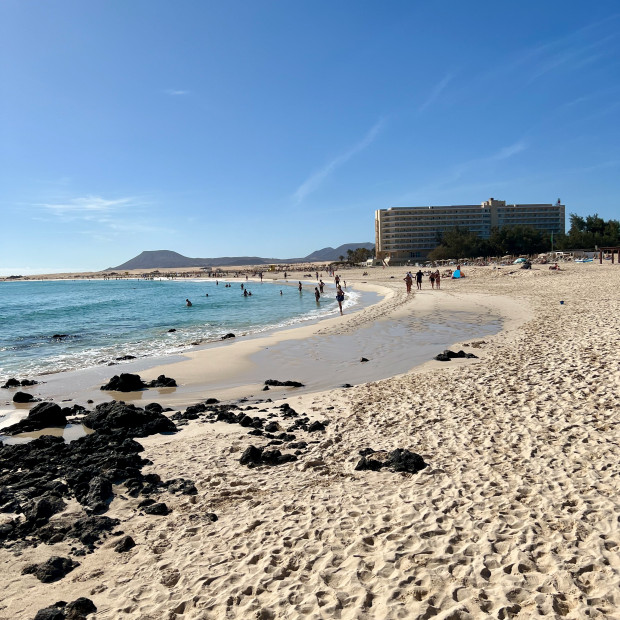
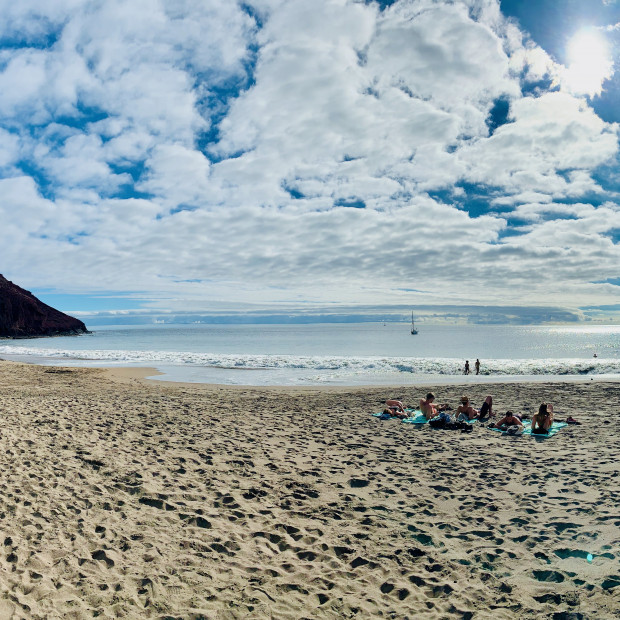
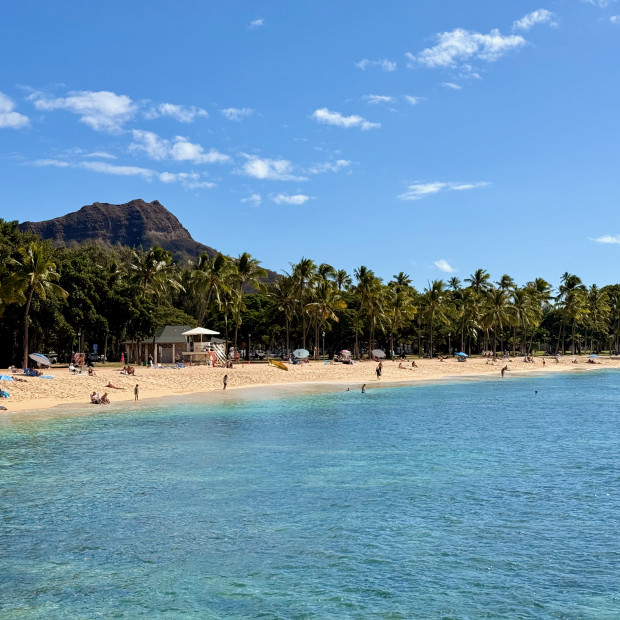
The marina itself is a central feature, filled with a mix of yachts, pleasure craft, and the original local fishing boats that still operate from the harbor. The waterfront is lined with a wide array of restaurants, cafes, and shops. Adjacent to the harbor is a well-protected, man-made beach with golden sand, which was imported to create a calm swimming area suitable for families. The original fishing village still exists as a separate neighborhood on the hillside overlooking the newer development.