About this place
Iguazu Falls are located on the Iguazu River, which forms a natural boundary between the province of Misiones in Argentina and the state of Paraná in Brazil. The falls are the central feature of Iguazú National Park, a protected area of subtropical rainforest and a designated UNESCO World Heritage site. The primary access point and service town on the Argentine side is Puerto Iguazú.
Physical Formation and Scale
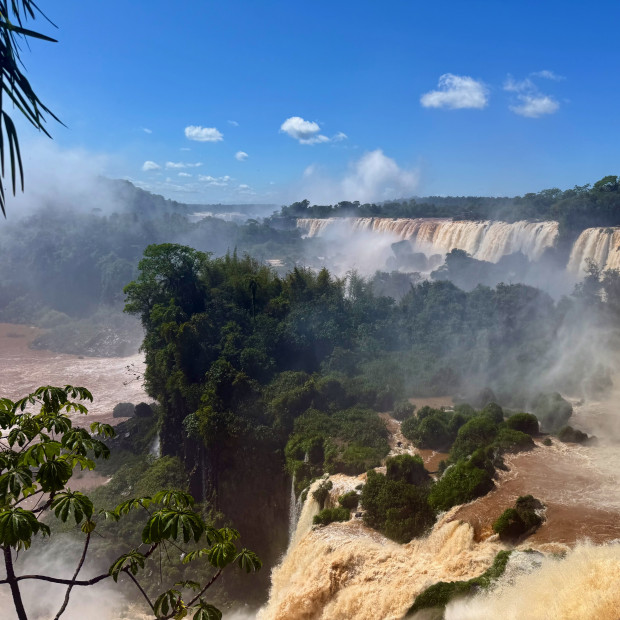
The falls are not a single, monolithic waterfall but a vast and complex amphitheater of approximately 275 individual cataracts arranged in a crescent shape that stretches for nearly 3 kilometers. This formation is the result of the Iguazu River flowing over the edge of a large basalt plateau. The majority of these individual waterfalls, around 80% of the total, are situated within Argentine territory.
The system's dramatic centerpiece is the Garganta del Diablo, or Devil's Throat. This is a narrow, U-shaped chasm into which an immense volume of the river's water thunders down with tremendous force from a height of over 80 meters. The constant plunge creates a powerful roar that can be heard from kilometers away and sends a permanent cloud of mist high into the air.
The Argentine Park Experience
The design of the park on the Argentine side is focused on providing an intimate and multi-sensory encounter with the falls. It features an extensive network of metal catwalks and walking trails that are built directly over the water and along the edges of the cliffs, allowing visitors to be immersed in the heart of the cascades.
The park is structured into several main circuits. The Upper Circuit offers a serene walk along the crests of the falls, providing a bird's-eye perspective of the water as it gathers momentum and begins its descent. In contrast, the Lower Circuit is a more rugged path that descends into the spray-filled canyons, bringing visitors face-to-face with the raw power at the base of the cascades.
The journey to the Garganta del Diablo is a distinct experience. A small ecological train transports visitors part of the way, followed by a walk of over one kilometer along an elevated walkway that stretches across the deceptively placid and wide upper river. The tranquility of this approach gives way to the deafening roar and overwhelming spectacle at the viewing platform, which hangs directly over the precipice of the main chasm, placing visitors in the center of the mist and sound.